Case study
Campaign Automation
RealifeTech had genuinely sophisticated audience segmentation. Venue marketing teams could not use any of it. Making the power reachable turned a data platform into a revenue engine.
- Company
- RealifeTech
- Role
- Mid Product Designer
- Sector
- B2B SaaS — sport & entertainment venues
- Used by
- Phoenix Suns and enterprise venues
- Year
- 2021—2022
Powerful segmentation. Inaccessible tool.
The challenge
Capability nobody could reach
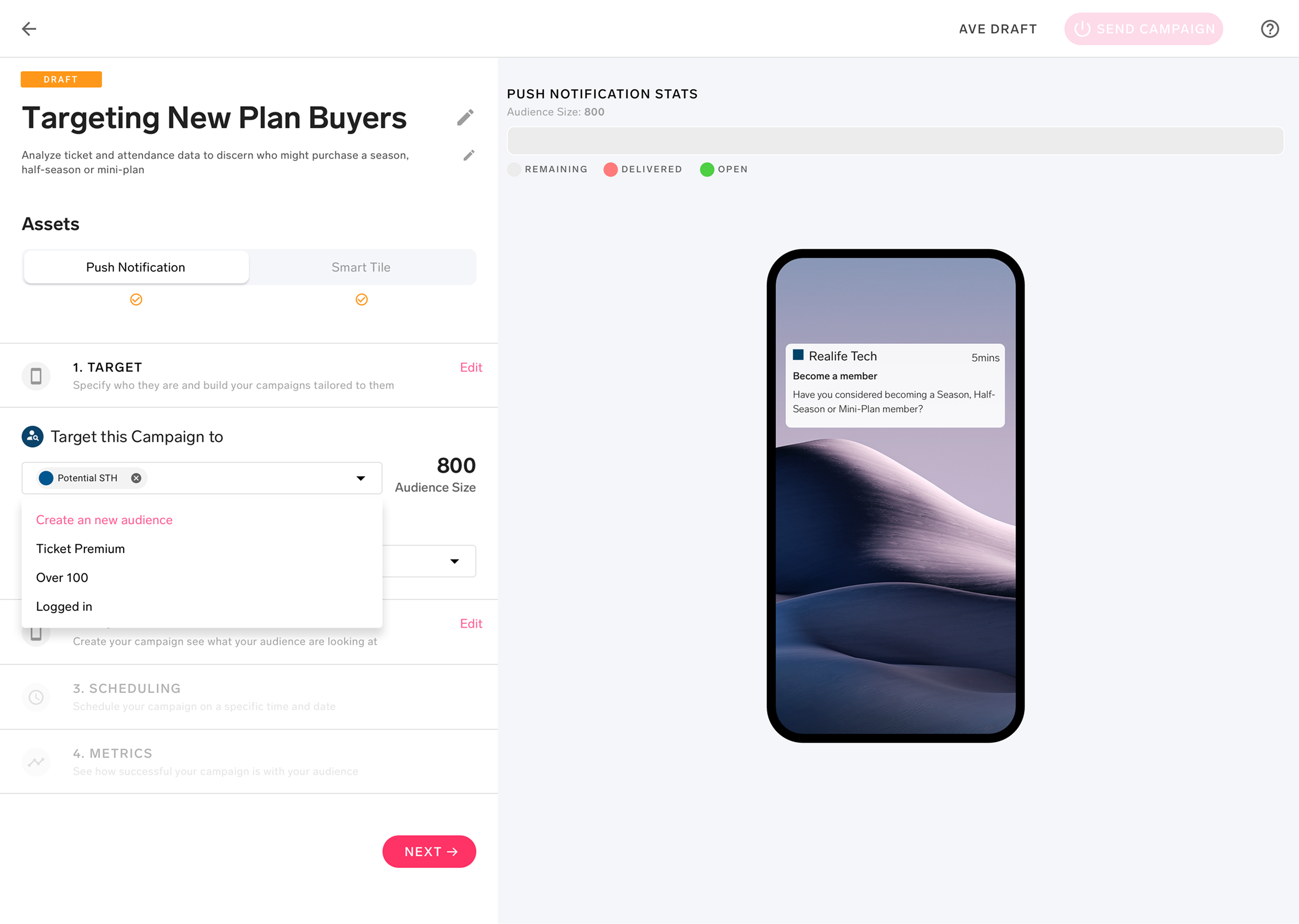
The segmentation engine could slice an audience by behaviour, attendance, spend and location. Using it required a mental model of how the data was structured — which the marketing managers at a stadium, who are running a matchday campaign between other jobs, reasonably did not have.
The result was low adoption of the platform’s single most valuable capability, and a Customer Success team spending its time configuring campaigns by hand on behalf of customers who had bought a self-serve tool.
Discovery
Five users, three places they gave up
I recruited five people who actually ran campaigns, through Customer Success, and mapped the campaign lifecycle end to end with each of them. Three abandonment points showed up consistently.
-
01
Audience configuration
The point of highest drop-off. Users could not predict what a set of conditions would actually return, so they either guessed or stopped.
-
02
Scheduling
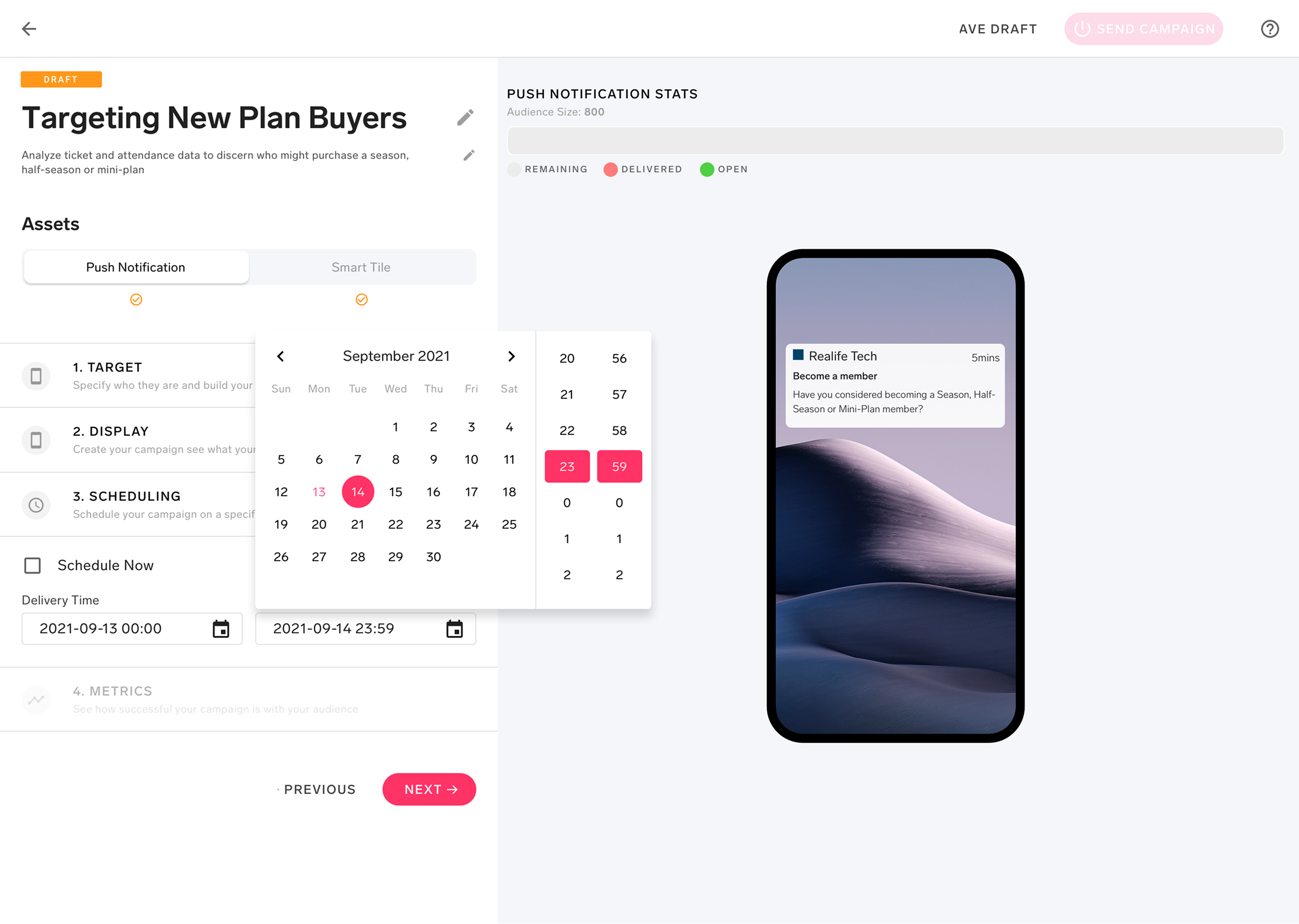
No clear model of what was already going out, to whom, and when — so scheduling anything new felt like a risk of double-messaging the same fans.
-
03
Performance interpretation
Results arrived as numbers without a frame. Users could read the dashboard and still not know whether the campaign had worked.
The finding underneath all three: segmentation logic was invisible until after the campaign had been created. Users were being asked to commit before they could see what they were committing to.
Principles
Four rules for the redesign
-
01
Clarity over complexity
If a capability cannot be explained inside the interface, it is not shipped as a capability.
-
02
Progressive disclosure
Simple campaigns stay simple. Depth is available the moment it is asked for, and invisible until then.
-
03
Confidence through feedback
Show the consequence of every choice while it is still being made — audience size updating live as conditions change.
-
04
Speed to launch
The measure of the tool is how fast a marketer can get a good campaign out, not how much it can theoretically do.
Design
The decisions that did the work
- 01 / 03
Campaign Priority List
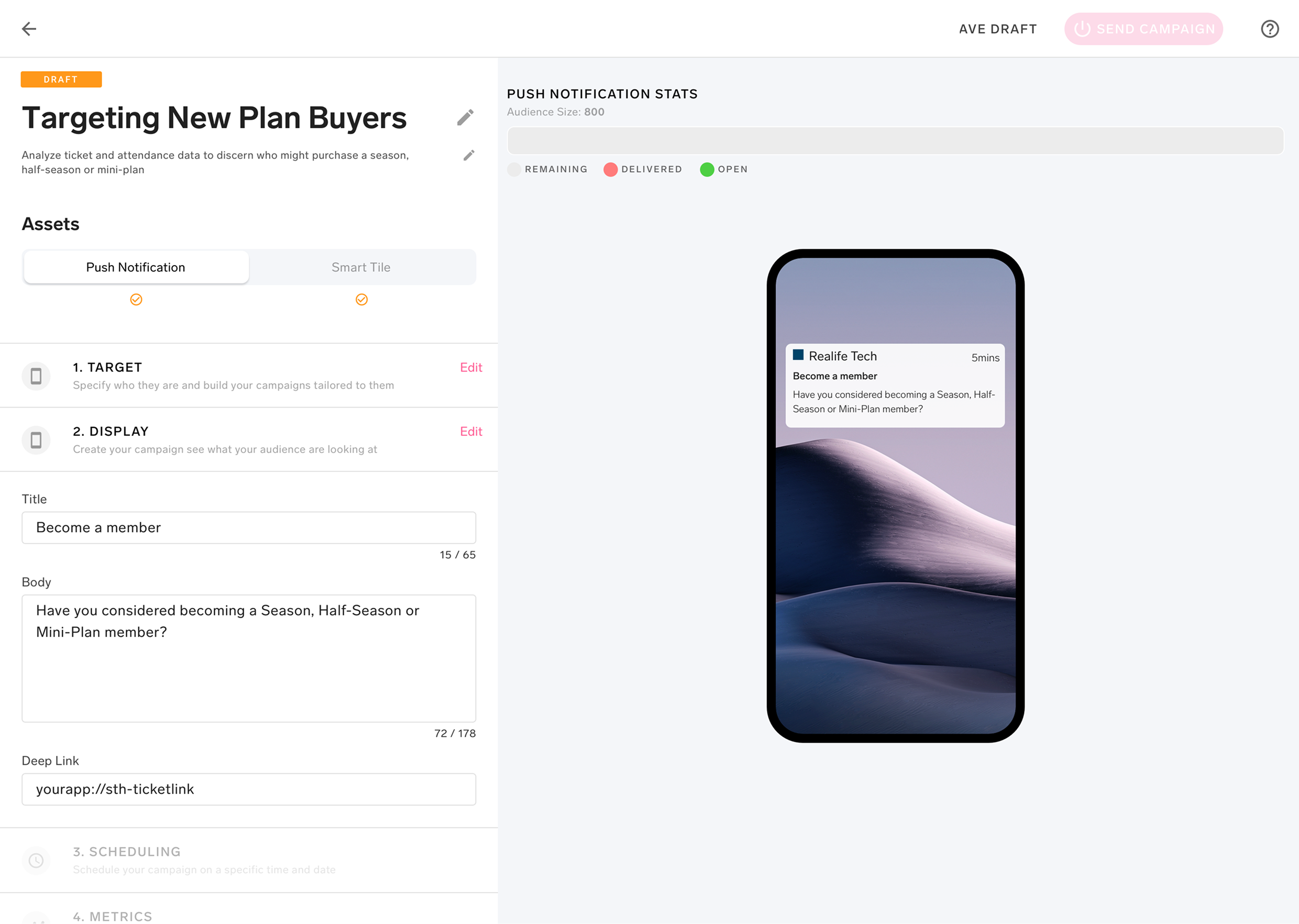
Campaigns had been treated as isolated objects. The Priority List showed the whole slate — what was live, what was scheduled, who each one targeted and in what order — so teams could see and resolve collisions before they reached a fan’s phone. Strategic visibility without adding a step to the creation flow.
The campaigns board 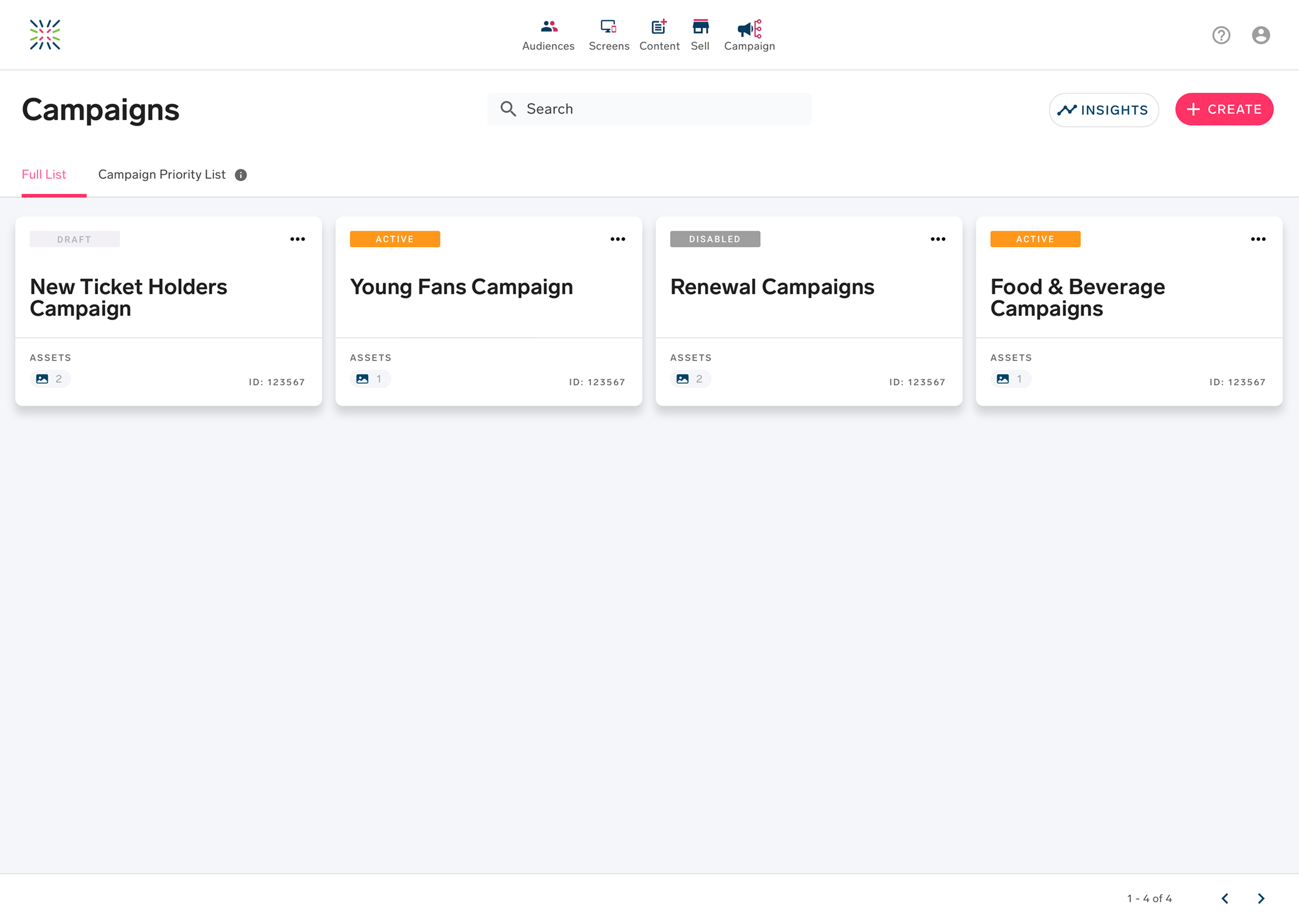
Priority List, explained in place 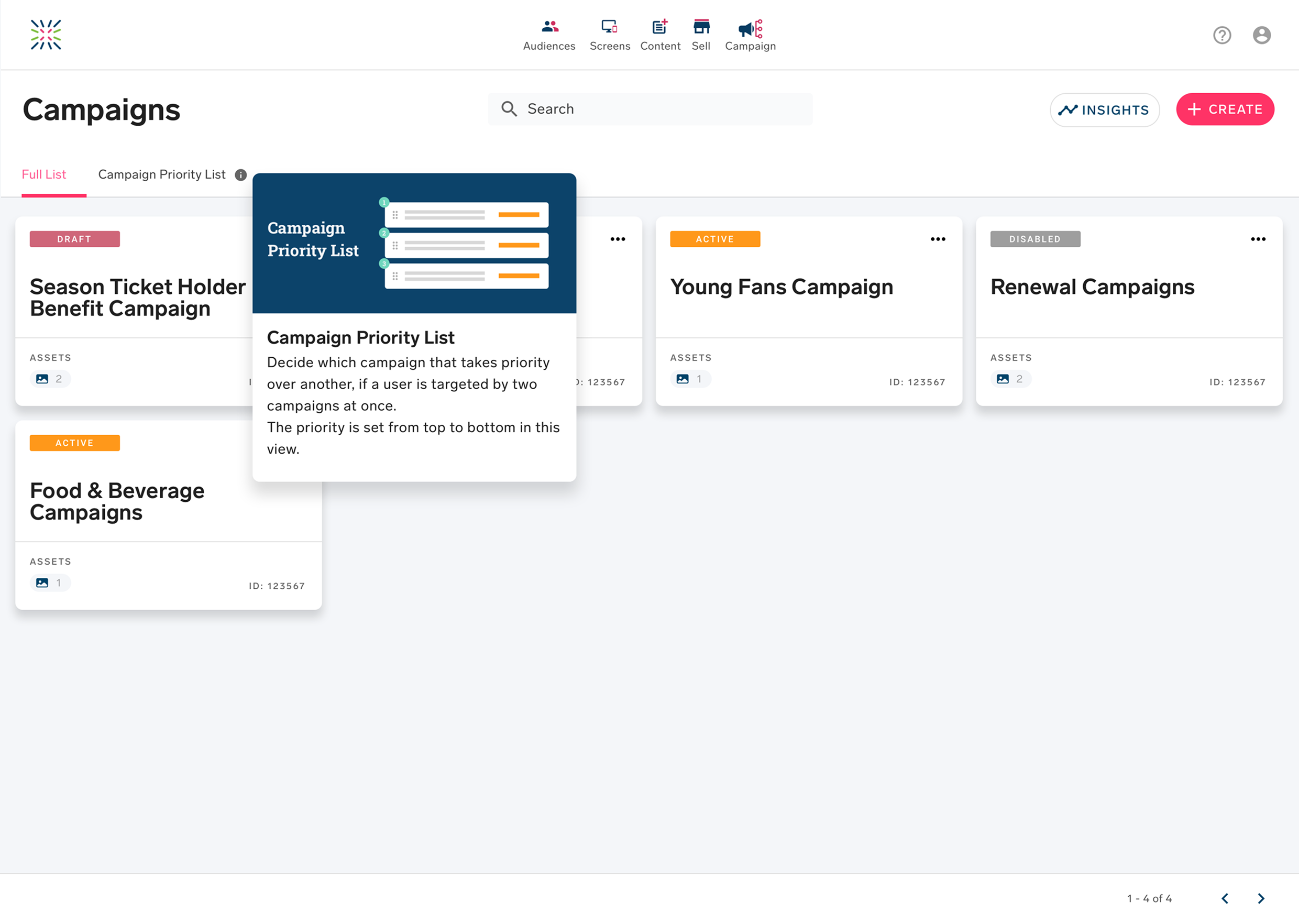
- 02 / 03
Modal variation on an existing widget
A modal variation of a content widget we already had, rather than a new component. It kept design system consistency, shipped faster, and preserved the task context — nobody had to navigate away from the campaign they were building to choose what went inside it.
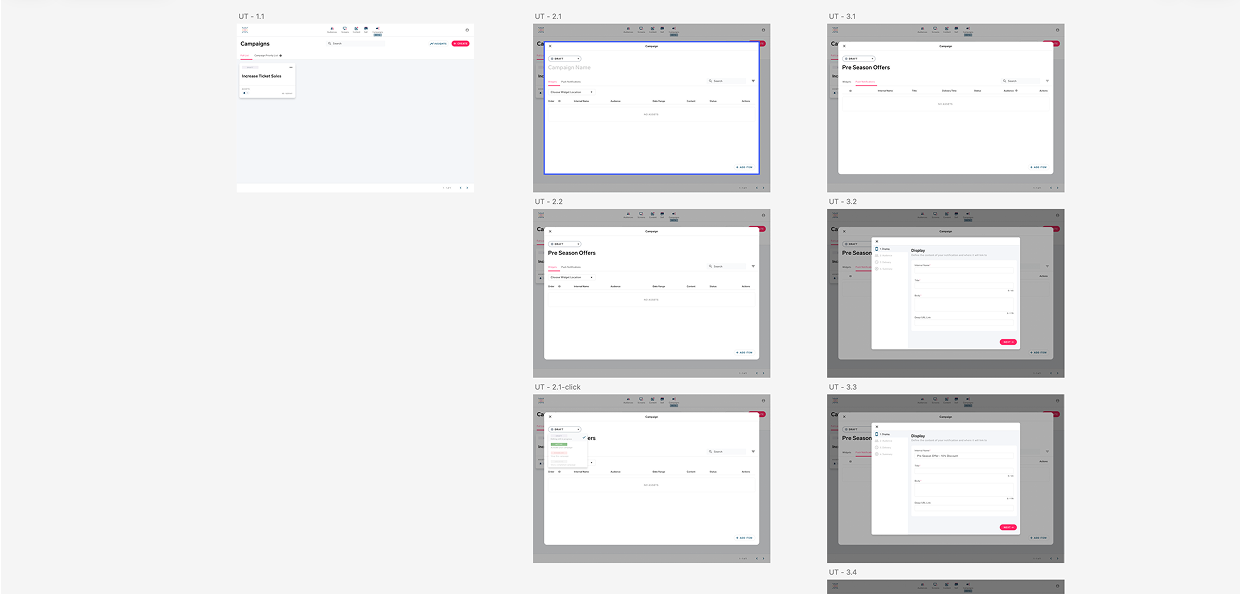
Campaign items 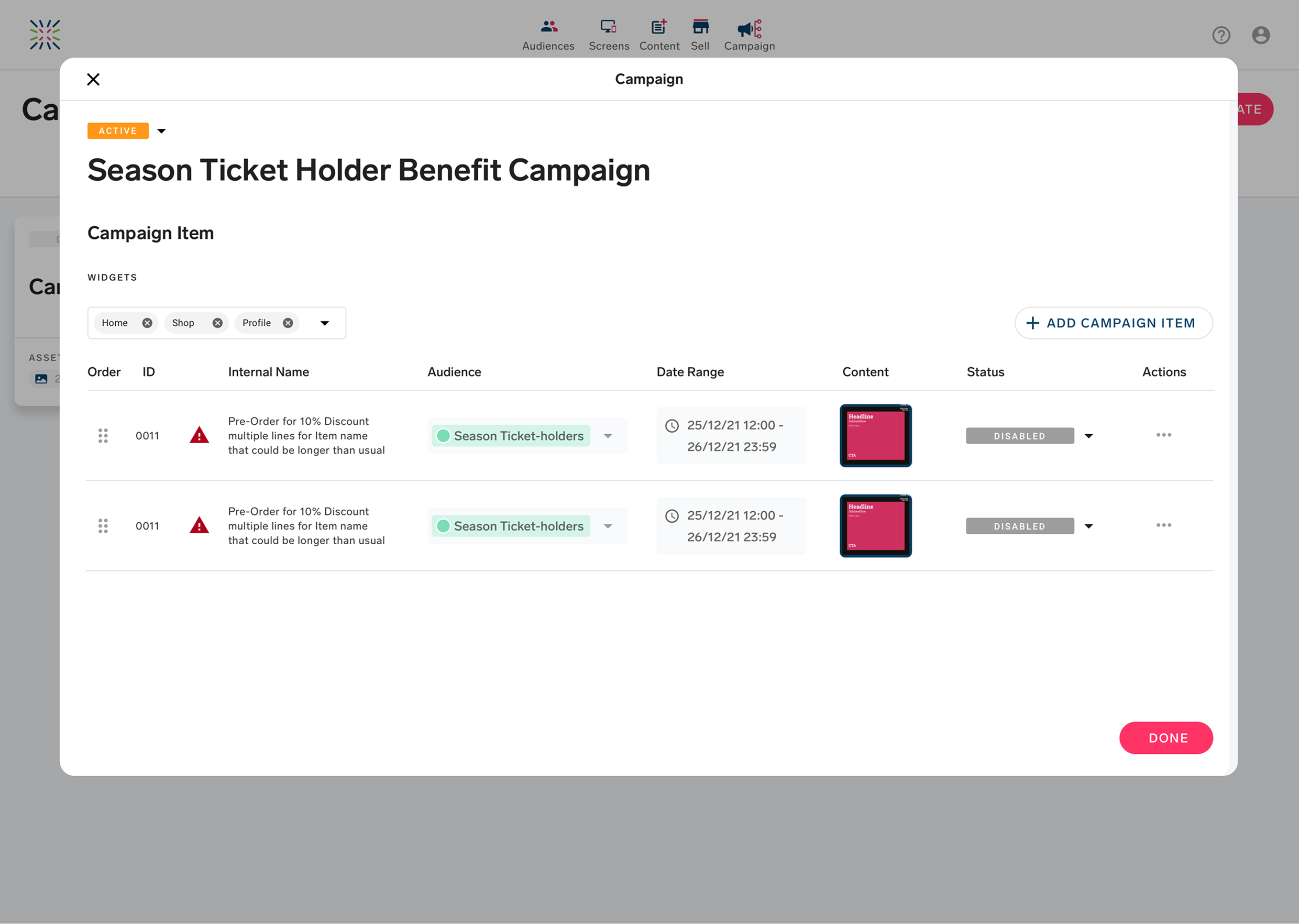
Banner Library, opened over the campaign 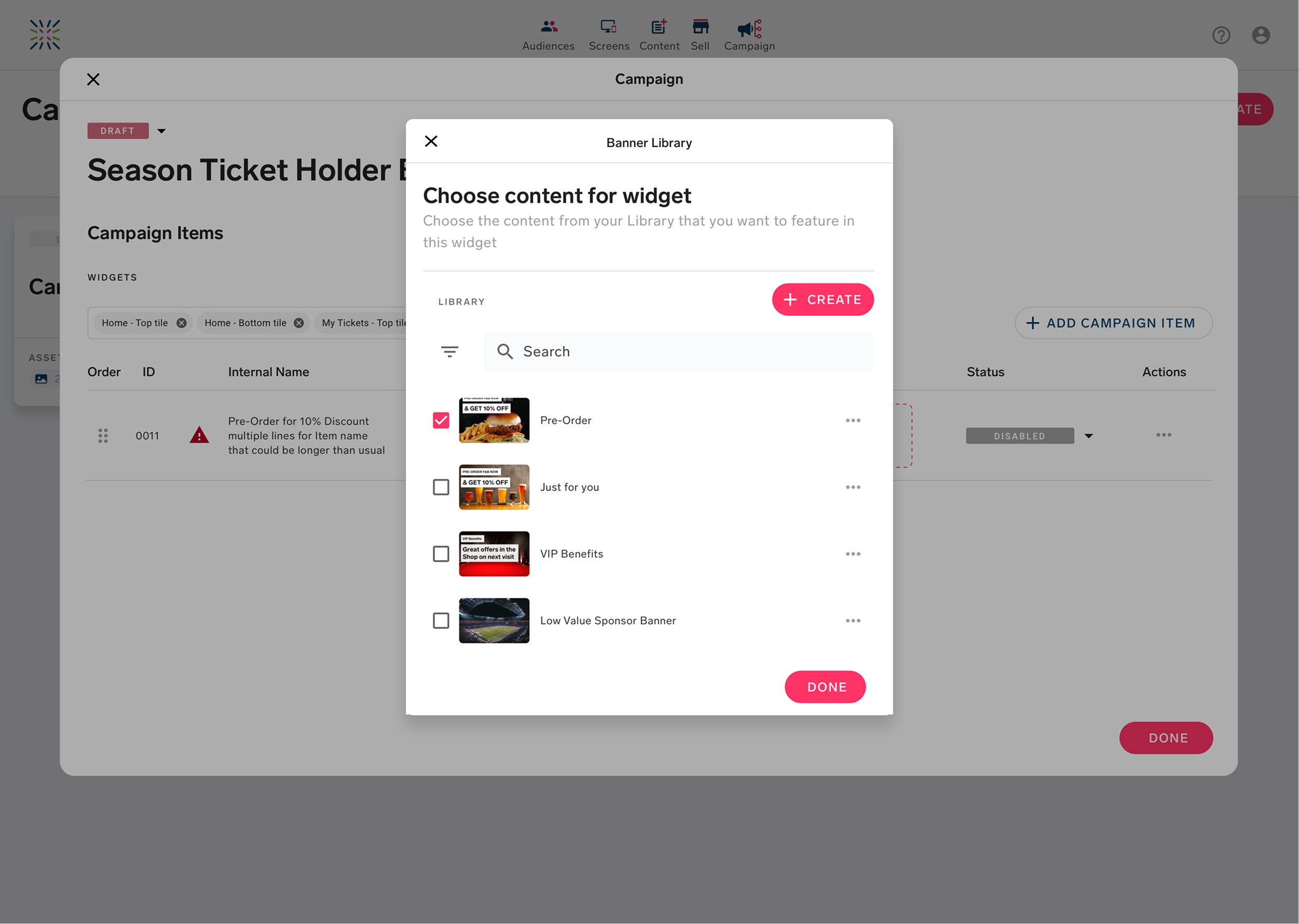
- 03 / 03
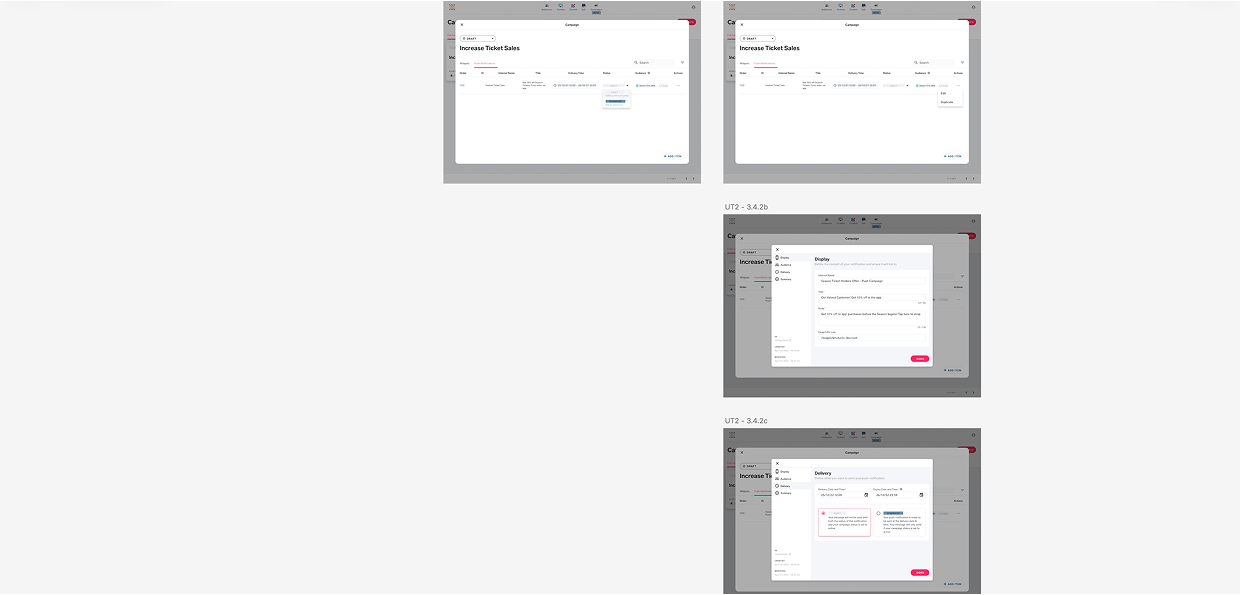
Table-view row pattern for scheduling
Campaigns ran simultaneously against real-time audience data. The row pattern made scheduling and timing status scannable at a glance without asking anyone to understand the API behaviour underneath, and it was reusable everywhere the same problem appeared.
Empty state 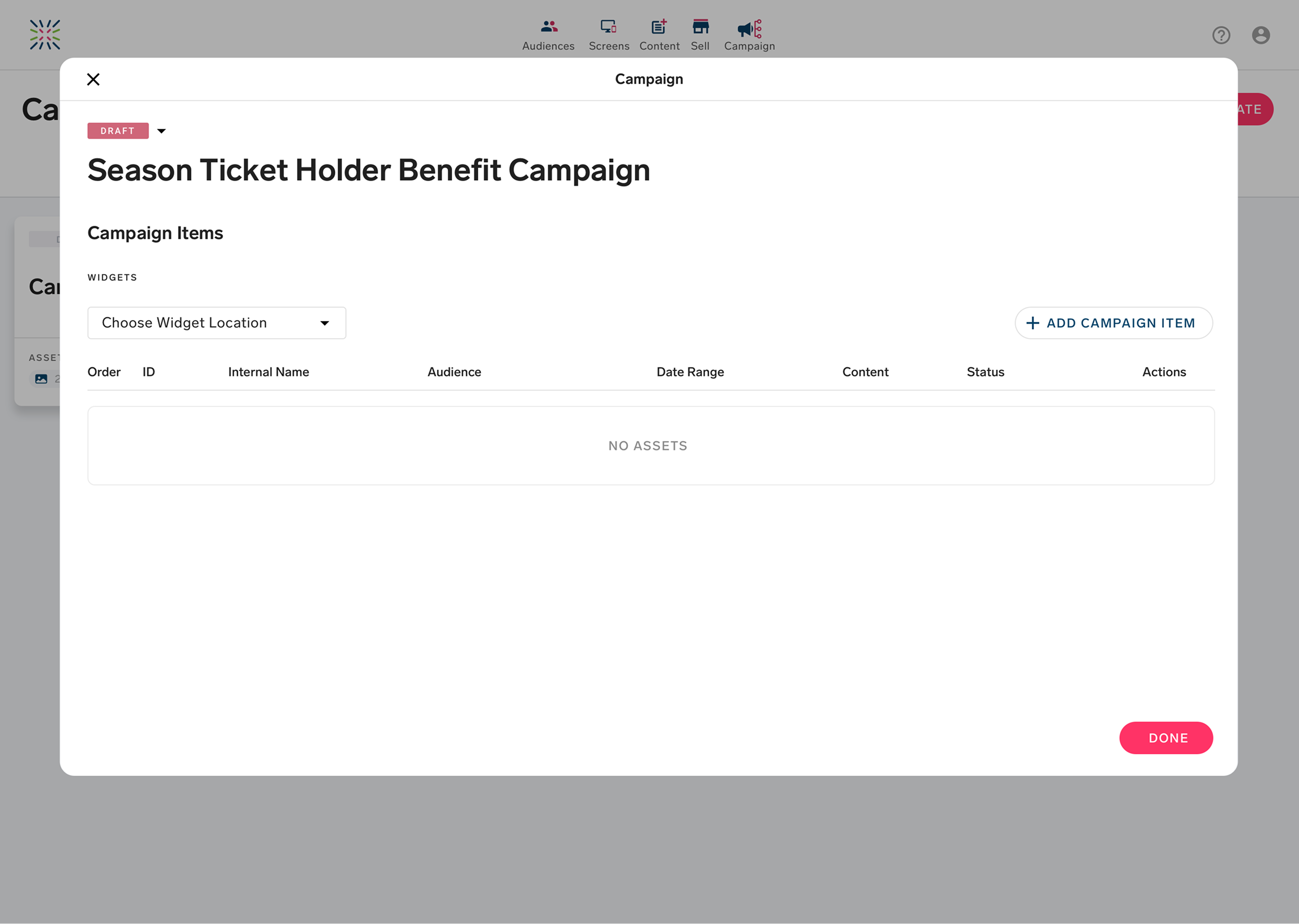
Scheduling a row 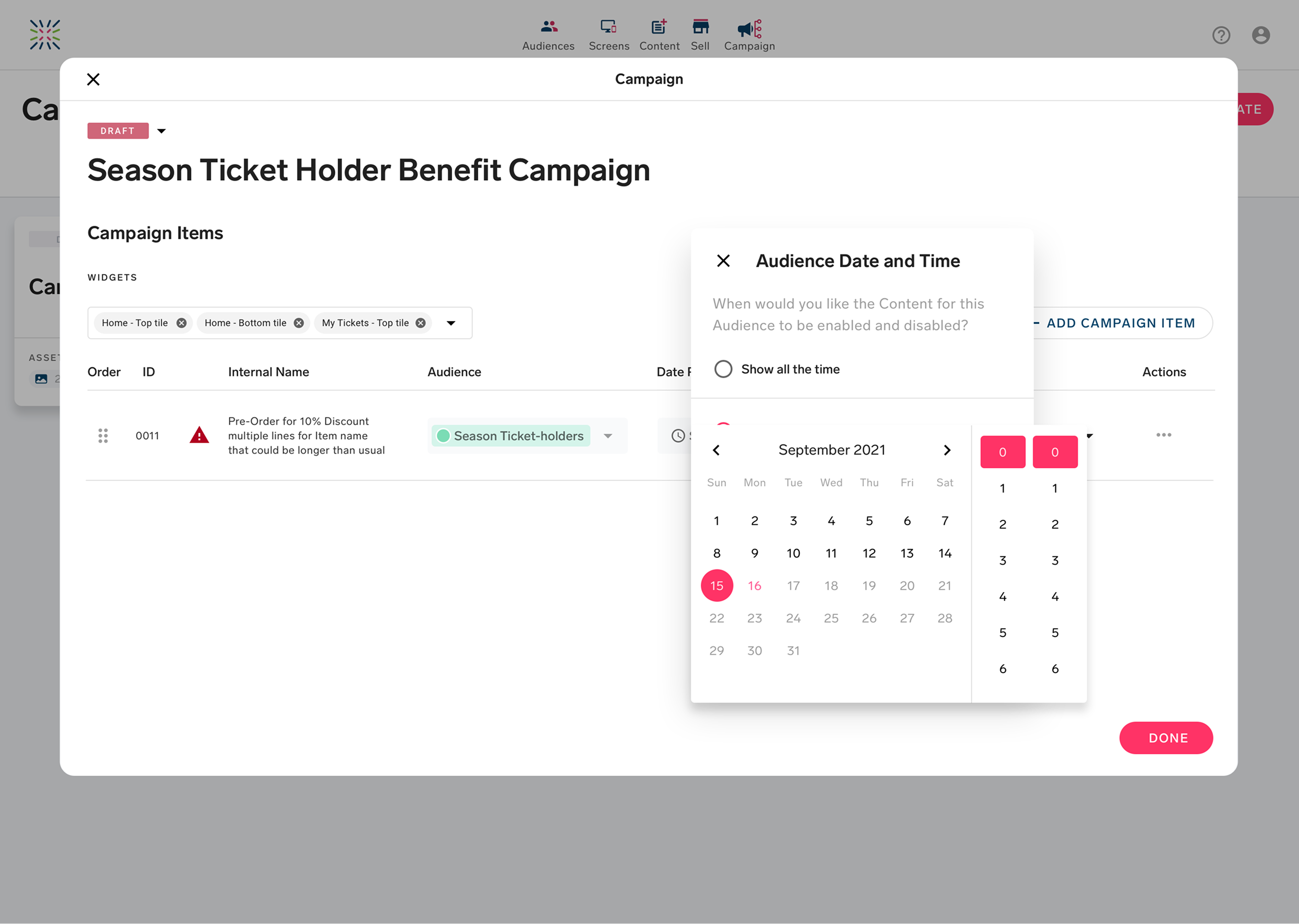
Outcome
From data platform to revenue activation engine
Campaign Automation became a commercial driver rather than a feature. It supported enterprise acquisition — the Phoenix Suns among them — and cut the platform’s reliance on bespoke configuration by Customer Success.
Internally it changed the sales story: RealifeTech stopped selling a data platform and started selling revenue activation, with this as the demonstrable difference.
Takeaways
What I took from it
-
Progressive disclosure is a strategy, not just a pattern. It decides which customers a product is for.
-
Customer Success is the best recruitment channel in B2B research. They know who actually uses the thing and who has already given up on it.
-
When users cannot predict what an action will do, they stop taking it. Feedback before commitment is worth more than any amount of documentation.